BACKGROUND
In Wisconsin, our lakes are watched over by a network of professionals and more than 1,000 volunteer citizen scientists — neighbors, anglers, retirees, and families keeping an eye on the water in our backyards.
Their tool is the Secchi disk: a simple disk split into black and white quadrants. Lower it into the water, note the length of rope where it disappears from sight, and that’s the Secchi depth. Volunteers record it alongside the water’s color as seen on the white quadrats.
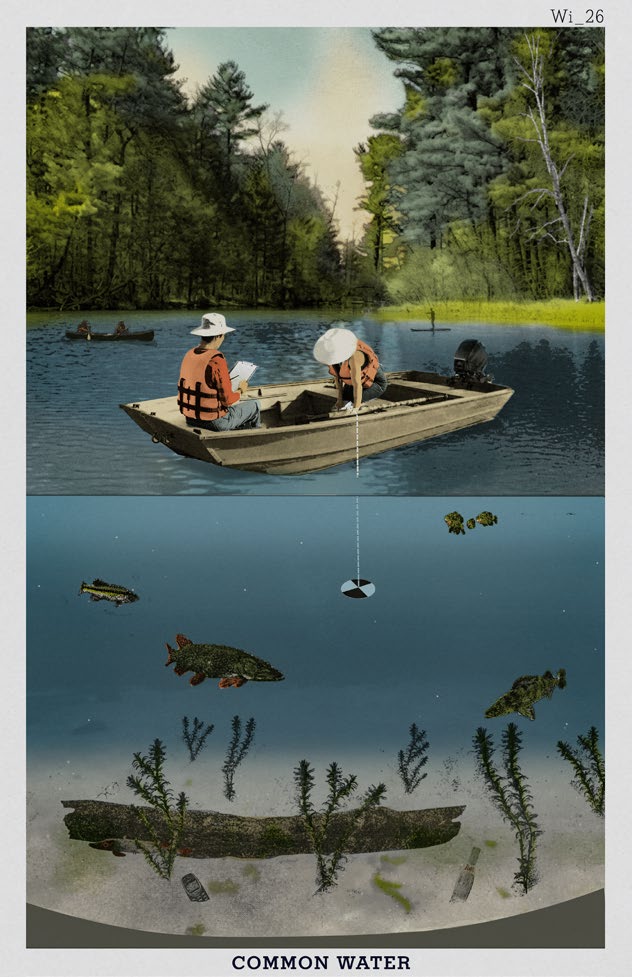
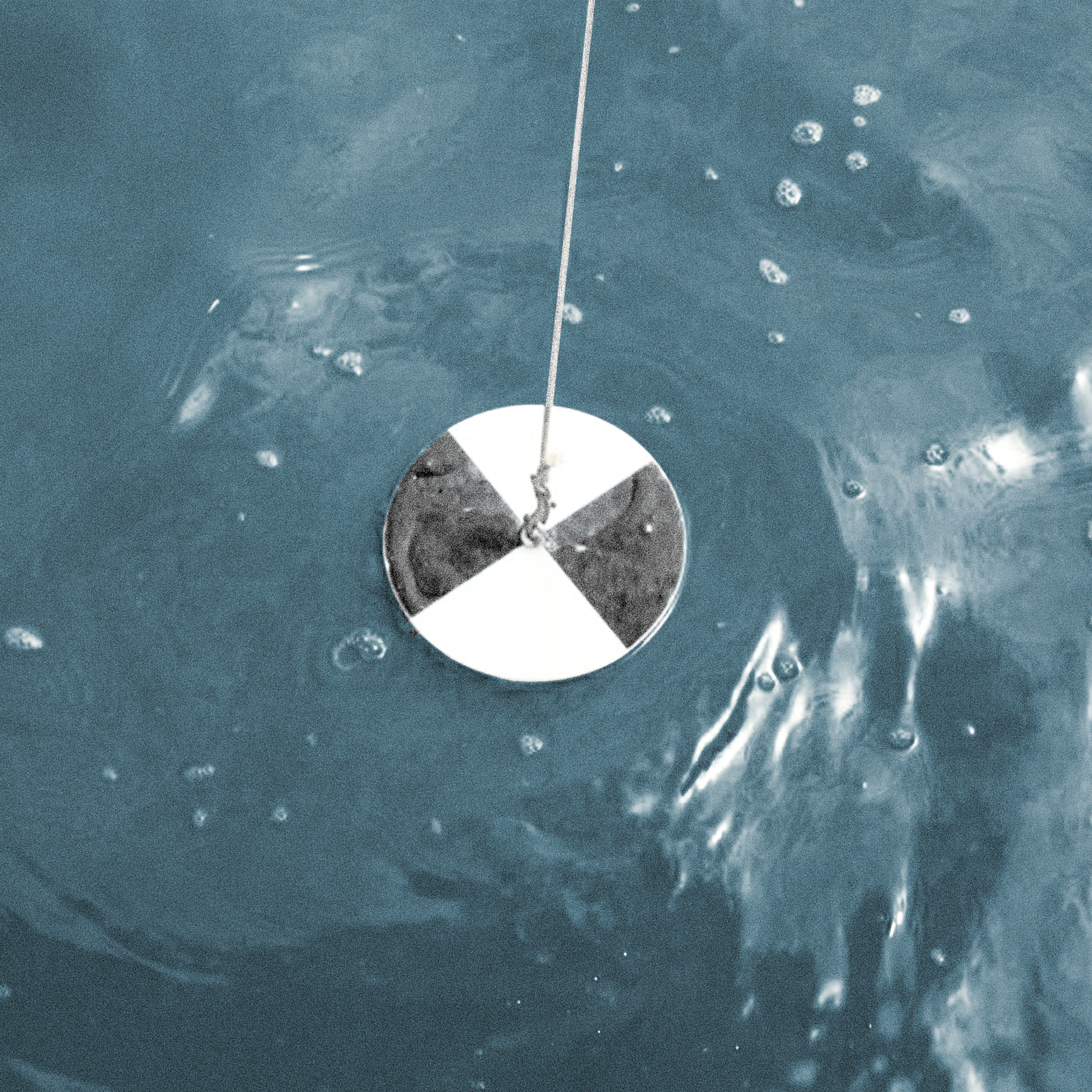
Secchi depth measures water clarity — one of the most reliable and accessible signals of a lake’s condition. Hazy water can mean dirt, algae, or runoff washing in. But not always: some of Wisconsin’s healthiest lakes run dark and tea-colored, stained naturally by bog tannins.
Taken one lake at a time, these readings build the long-term record that shapes how we swim, fish, and protect Wisconsin’s water.
 CLEAR and PURE
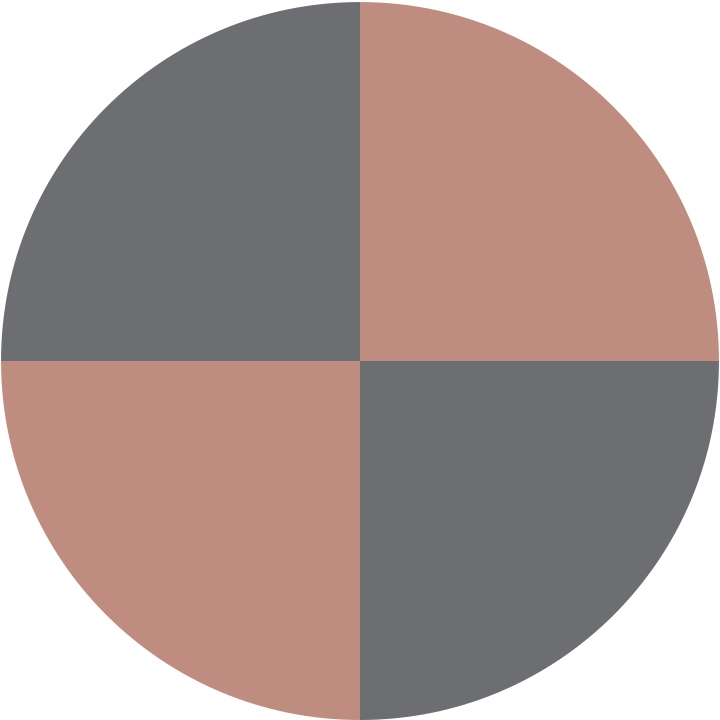 HIGH IRON or ALGAE BLOOM
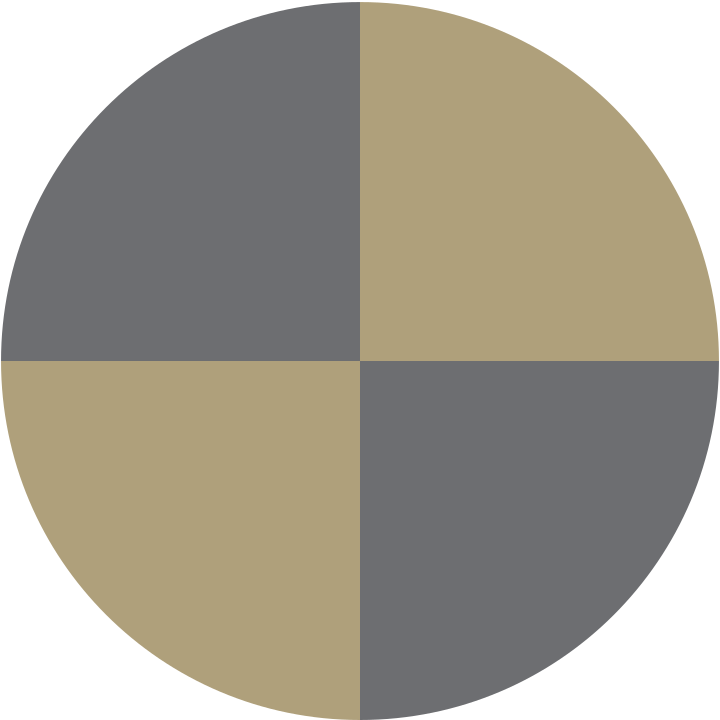 DECAYING PLANTS or HIGH SEDIMENT
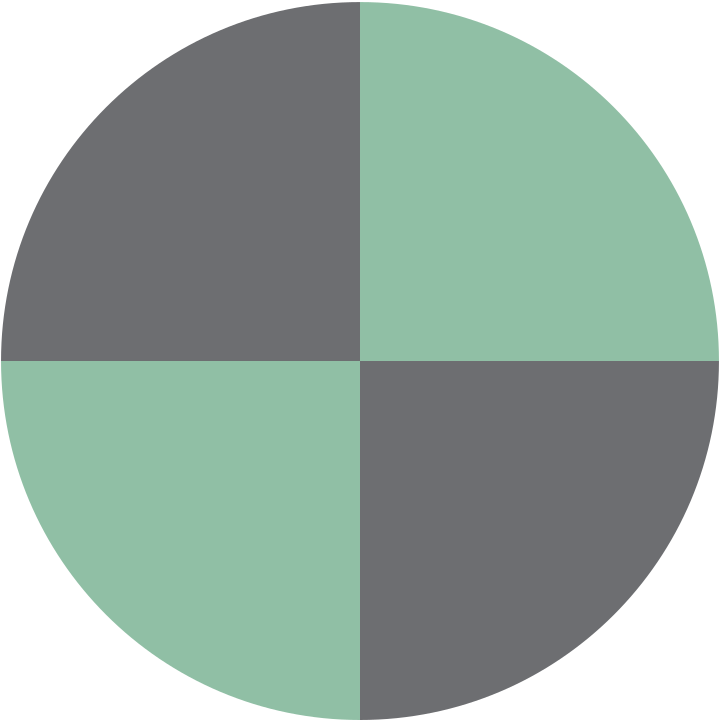 RICH ALGAE and PLANT LIFE
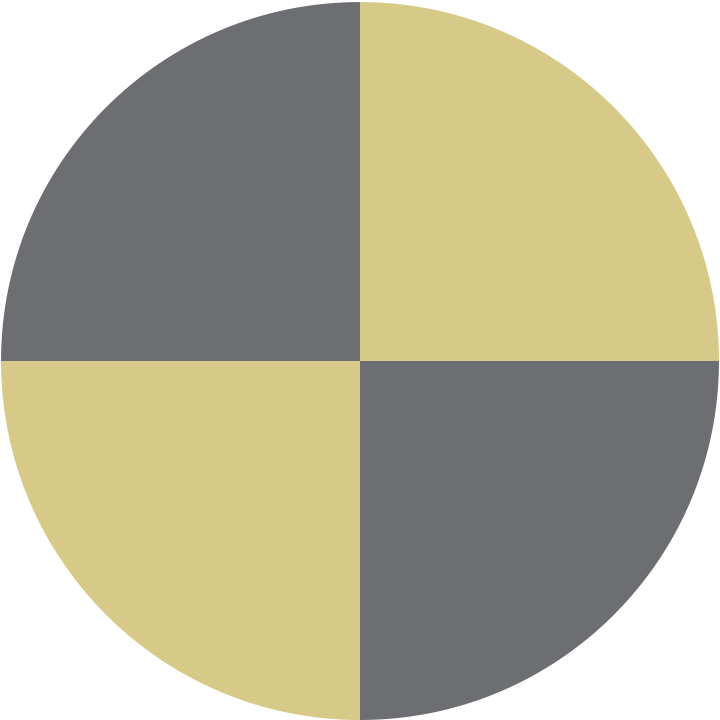 DECAYING PLANTS

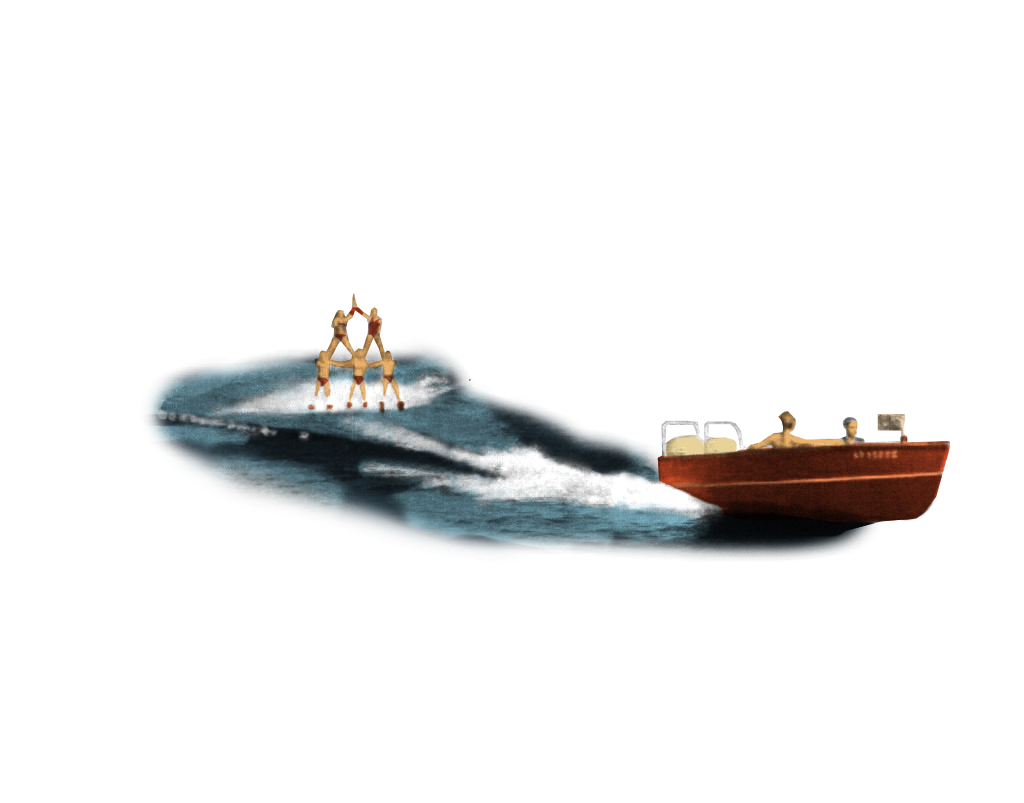
Every time a community scientist takes a secchi disk reading, they also note the secchi color. Each of the five color categories tells us what’s in the lake. Blue means clear water, with little algae or staining. Green usually means algae, often fueled by excessive nutrients. Yellow and brown come from decaying leaves and plants — lightly stained for yellow, tea-dark for brown. Dark water is natural in bog country and does not mean a lake is unhealthy. Red is rare, caused by iron or certain algae.

Common Water is a community art project connecting us to Wisconsin lakes and the people who look after them. For almost forty years volunteers have measured our lakes’ clarity with a simple black-and-white disk and recorded each lake’s color. Here, you can join them: pick your lake, find its color category, and answer a few quick questions. Your tile becomes part of a shared artwork, unveiled next spring at the Wisconsin Institute for Discovery.
Archived Online
Processed
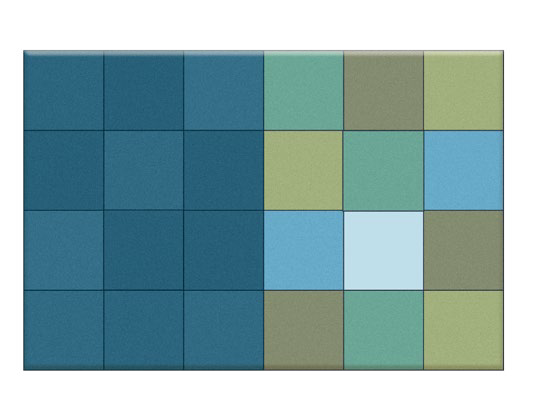
Joined With Others
Built into Final
Piece
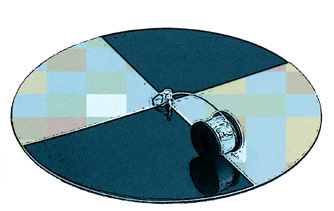
Fall 2026
Winter 2026
Spring 2027